History
Ashtanga yoga stands in a long lineage of Indian yoga traditions. Tirumalai Krishnamacharya (1888–1989), often called the father of modern yoga, taught in Mysore in the first half of the 20th century and developed a dynamic, breath‑linked way of practising that combined classical yoga philosophy with physical postures, breath work, and individualised instruction.
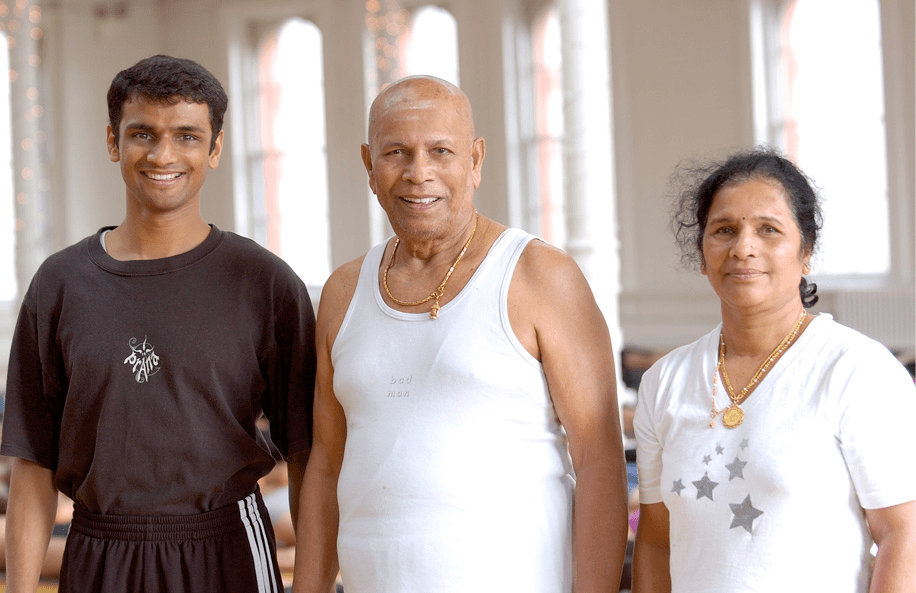
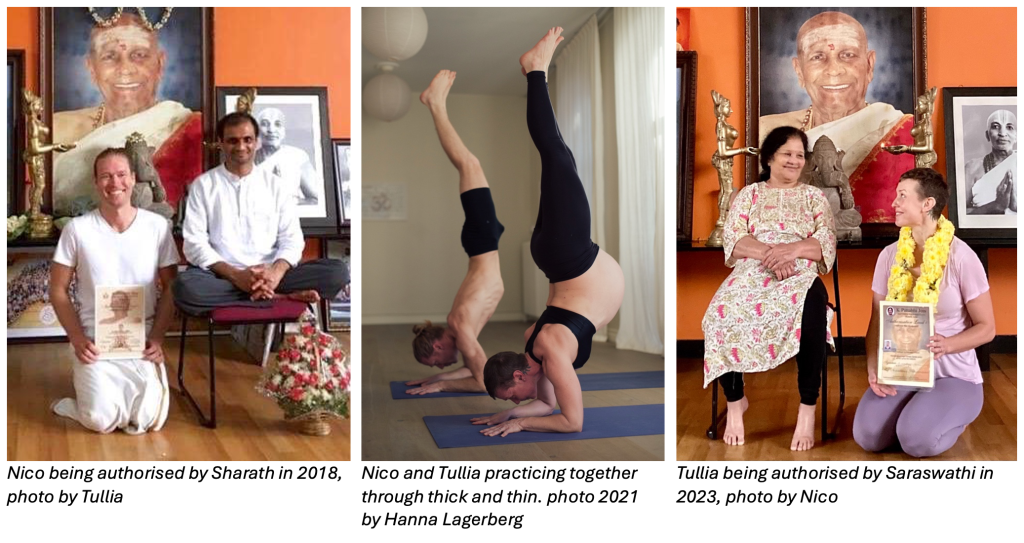
One of his students was K. Pattabhi Jois (1915–2009), who went on to teach what became known as Ashtanga Vinyasa Yoga in Mysore and later to students from all over the world. His daughter Saraswathi Jois (b. 1941) and grandson Sharath Jois (1971-2022) have both continued this teaching, welcoming generations of practitioners to the shala in Mysore and sharing the practice globally.
The eight limbs
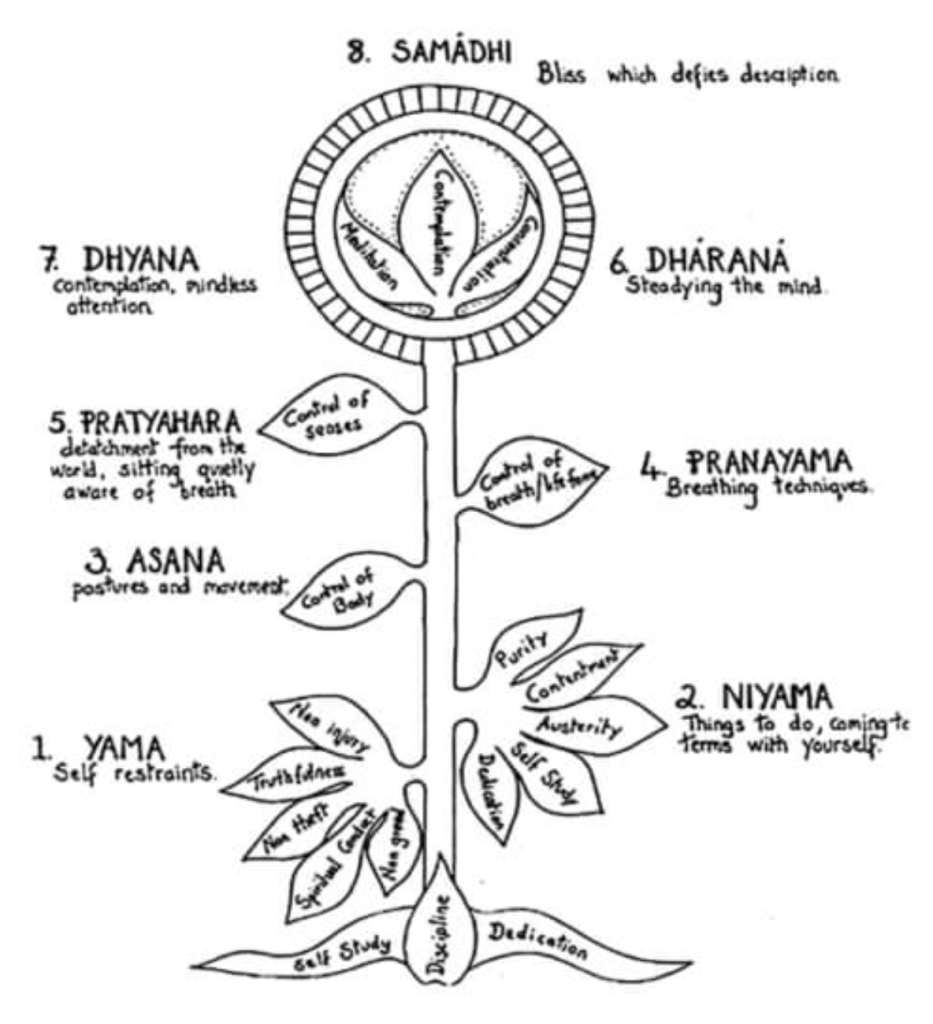
Ashtanga means eight limbs in Sanskrit. It refers to the eightfold path described in Patanjali’s Yoga Sutra:
- Yama – ethical foundations (Ahimsa – non‑harming, Satya – truthfulness, Asteya – non‑stealing, Brahmacharya – moderation, Aparigraha –non‑hoarding.).
- Niyama – personal observances (Saucha – purity, Santosha – contentment, Tapas – discipline, Svadhyaya – self‑study and Ishvara pranidhana – surrender to the divine).
- Asana – physical postures that support stability, ease, and health in the body.
- Pranayama – regulation of the breath.
- Pratyahara – turning the senses inward.
- Dharana – steadying the mind.
- Dhyana – contemplation, mindless attention.
- Samadhi – bliss which defies description.
In everyday practice we often begin with asana and breath, but the intention is to support all eight limbs over time, on and off the mat.
Asana
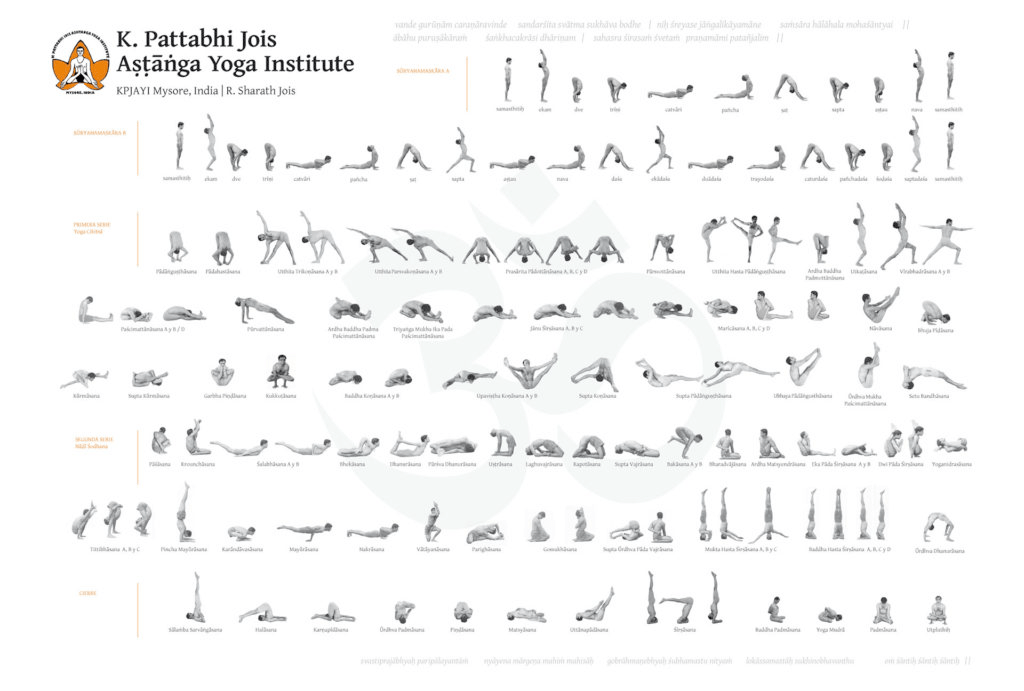
In Ashtanga Vinyasa Yoga, the physical practice follows set sequences of postures linked by breath and movement. You gradually build your own sequence over time with guidance.
In a traditional Mysore‑style room, everyone practices at their own pace within a shared sequence: you arrive, unroll your mat, and move through your practice with your own breath, surrounded by others doing the same. Adjustments and guidance, when offered, are individual. It is like personal training in a group – your practice is your own, but you are not alone.
Ashtanga in modern life
Research on yoga and on Ashtanga‑based practices suggests a range of potential benefits for both physical and mental health: improvements in strength, flexibility, balance and cardiovascular markers; reductions in perceived stress and anxiety; support for mood and sleep; and in some cases help with chronic pain, fatigue, and coping with everyday demands. Studies also point to the value of regular, long‑term practice, not just occasional classes, and to the importance of practicing in ways that are sustainable and responsive to individual bodies and life situations.
 Ashtanga Folk